Ability of ecosystems to regenerate resources and absorb wastes, measured in global hectares?
Answer: Biocapacity
Extracting gas from shale by injecting water, sand and chemicals at high pressure?
Answer: Fracking
Large-scale acquisition of farms and fields in poorer countries by foreign investors or governments?
Answer: Land grabbing
IB Geography · SL and HL core
IB Geography Unit 3: Global resource consumption and security
2 ready-made review sets for this unit, 28 questions in all, for SL and HL, to play as a class game on the projector. Free to host, and students join with a code.
A question from the sets
Ability of ecosystems to regenerate resources and absorb wastes, measured in global hectares?
- Ecological footprint
- BiocapacityRight answer
- Carrying capacity
- Natural capital
What Unit 3 covers
Unit 3, the third core unit, is about the resources people depend on: water, food and energy. Global trends in consumption: measures such as the ecological footprint and biocapacity, the growth of the global middle class, and the nutrition transition towards more meat and dairy. Impacts of changing trends in resource consumption: the water–food–energy nexus, virtual water and fossil water, land grabbing, energy security and the energy mix, from fracking and peak oil to renewables and biofuels. Resource stewardship: Malthusian, neo-Malthusian, Boserupian and cornucopian views of population and resources, The Limits to Growth, sustainable development and the SDGs, the circular economy and the waste hierarchy, and the planetary boundaries that define a safe operating space for humanity.
Where students slip
- An ecological footprint is an area: the productive land and water needed to supply a population and absorb its wastes, measured in global hectares. A carbon footprint is not an area but an amount of greenhouse gas emissions, in CO₂ equivalent.
- Malthus argued that population grows faster than food supply until famine, disease or war checks it. Boserup argued the reverse: that population pressure drives farmers to innovate and intensify, so food supply rises to meet it.
- Virtual water is not water that can be reused. It is the water used to produce a good, mostly in growing or processing it, so a country that imports wheat is in effect importing the water that grew it.
The sets
Play this set opens the set in splycr, where you can read every question and host it for your class straight away. Hosting needs no account, and students join with the code on the board. A free account lets you copy a set and edit it.
The questions were written for the splycr library by Biology by Bradford. Each one plays as multiple choice, and the three wrong options were written for that question.
Thinker who argued that population pressure stimulates farming innovation and intensification?
Answer: Boserup
System keeping materials in use through repair, reuse and recycling, designing out waste?
Answer: Circular economy
Nine Earth-system limits, such as climate change and biodiversity loss, defining a safe operating space?
Answer: Planetary boundaries
Game modes that suit this unit or option
Every set plays in all eight modes. These two fit this unit or option best.
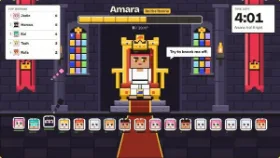
Throne
Malthus or Boserup, neo-Malthusian or cornucopian, linear or circular economy: the views in resource stewardship make a good duel. Put a volunteer on the throne and let the class try to take it; a wrong answer from the champion costs double.
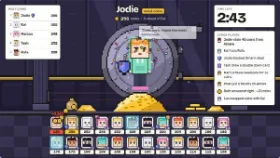
Sabotage
Unit 3 has a lot of vocabulary, from biocapacity to cradle to cradle. Sabotage runs to a clock you set (3, 5 or 8 minutes), not through the deck, so the questions keep coming until time is up, and power cards (freeze, steal, swap, shield) keep a student who is behind in the game.