Influence through cultural attraction and values rather than force or payment?
Answer: Soft power
Concessional aid from governments, with a UN target of 0.7% of donors' GNI?
Answer: Official development assistance
International organisation lending to countries facing balance-of-payments crises?
Answer: IMF
IB Geography · HL core extension
IB Geography Unit 4: Power, places and networks
2 ready-made review sets for this unit, 28 questions in all, for higher level, to play as a class game on the projector. Free to host, and students join with a code.
A question from the sets
Influence through cultural attraction and values rather than force or payment?
- Hard power
- Smart power
- Soft powerRight answer
- Sharp power
What Unit 4 covers
Unit 4 is the first of the three units of the HL core extension. Global interactions and global power: how globalisation is measured, with the KOF Index; hard, soft and smart power; and world systems theory's core, semi-periphery and periphery. Global networks and flows: transnational corporations and global supply chains, offshoring, outsourcing and reshoring, flows of foreign direct investment and official development assistance, and the roles of the IMF and the WTO. Human and physical influences on global interactions: protectionism, with tariffs, quotas, embargoes, subsidies and dumping; free trade areas and customs unions; special economic zones; containerisation and the extra trade costs of being landlocked; the digital divide; and resistance to globalisation, from anti-globalisation protest to resource nationalism.
Where students slip
- Offshoring is about place: moving a company's own production to another country. Outsourcing is about ownership: contracting the work to another company, which may be at home or abroad.
- In a free trade area, members remove tariffs between themselves but each keeps its own tariffs on outsiders. A customs union goes further: its members also share a common external tariff.
- Hard power is not only military. Economic coercion, such as sanctions, is hard power too; soft power works through attraction, through a country's culture, values and policies.
The sets
Play this set opens the set in splycr, where you can read every question and host it for your class straight away. Hosting needs no account, and students join with the code on the board. A free account lets you copy a set and edit it.
The questions were written for the splycr library by Biology by Bradford. Each one plays as multiple choice, and the three wrong options were written for that question.
Limit on the quantity of a good that may be imported?
Answer: Quota
Gap between people with and without access to the internet and computers?
Answer: Digital divide
Payments to domestic producers that make their goods cheaper than imports?
Answer: Subsidy
Game modes that suit this unit or option
Every set plays in all eight modes. These two fit this unit or option best.
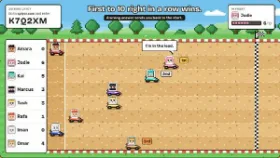
Racer in teams
Offshoring, outsourcing and reshoring; customs union and free trade area; tariff, quota and embargo. In team Racer each teammate sees different options and only one has the right answer, so the team has to agree on what the term actually means before anyone taps.
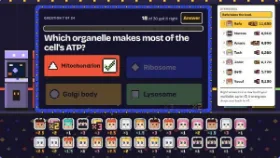
Splycr
Unit 4 has many terms that differ by one idea: hard, soft and smart power, or foreign direct investment and official development assistance. A streak raises the multiplier to 3× and one slip drops it back to 1×; fast answers score a little more, but a long streak counts for more.