IB Biology · Theme C of 4

IB Biology theme C: Interaction and interdependence

8 ready-made review sets for this theme, by subtopic and marked SL or HL, plus 3 mixed review sets that run into it. Free to host, and students join with a code.

A question from the sets

An inhibitor that binds to an allosteric site, changing the enzyme's shape?

  • Competitive inhibitor
  • End-product inhibition
  • Optimum temperature
  • Non-competitive inhibitorRight answer
From C1.1 Enzymes and Metabolism, 10 questions.

What Theme C covers

Theme C is about how the parts of living systems depend on each other. Molecules: enzymes and metabolism, cell respiration and photosynthesis. Cells: neural signalling, with chemical signalling at higher level. Organisms: the integration of body systems, and defence against disease. Ecosystems: populations and communities, and the transfers of energy and matter.

Where students slip

  • Cell respiration releases energy in cells to make ATP. Breathing is ventilation, which is something else.
  • Adding more substrate overcomes competitive inhibition, but not non-competitive inhibition.
  • An action potential is all or nothing: a stronger stimulus makes impulses more frequent, not bigger.
  • An antigen is the molecule that is recognized. Antibodies are the proteins, made by plasma cells (activated B lymphocytes), that bind to it.
  • Energy passes through an ecosystem and leaves as heat; carbon and other elements are recycled.

The sets

Play this set opens the set in splycr, where you can read every question and host it for your class straight away. Hosting needs no account, and students join with the code on the board. A free account lets you copy a set and edit it.

The questions come from the Biology by Bradford flashcard bank, written by an IB and AP Biology teacher. Each one plays as multiple choice, and the wrong options are other answers from the same set.

Sets marked SL suit every IB Biology student, because higher level students study the standard level content too. Sets marked HL cover the additional higher level material, and six subtopics are for higher level only: A2.1, A2.3, A3.2, B3.3, C2.1 and D2.2. Some sets are marked SL and HL, and cover both.

C1 · Molecules

C1.1 Enzymes and metabolism

C1.1 Enzymes and Metabolism

10 questionsSL and HL

  1. An inhibitor that binds to an allosteric site, changing the enzyme's shape?

    Answer: Non-competitive inhibitor

  2. The model describing how an enzyme changes shape slightly to fit its substrate?

    Answer: Induced-fit model

  3. The minimum energy required for a chemical reaction to occur?

    Answer: Activation energy

Play this setand 7 more questions

C1.2 Cell respiration

C1.2 Cell Respiration

14 questionsSL

  1. What is the total net gain of ATP molecules produced during glycolysis?

    Answer: 2 ATP

  2. Which two products are created when yeast undergoes anaerobic fermentation?

    Answer: Ethanol, CO₂

  3. Why is an alkali like KOH placed inside a respirometer during an experiment?

    Answer: Absorb CO₂

Play this setand 11 more questions

C1.3 Photosynthesis

C1.3 Photosynthesis (SL)

14 questionsSL

  1. The process of splitting water molecules using light energy to release electrons and oxygen?

    Answer: Photolysis

  2. A graph showing the rate of photosynthesis at different wavelengths of light?

    Answer: Action Spectrum

  3. The factor furthest from its optimum, which restricts the rate of a process (e.g., light, CO₂, temperature)?

    Answer: Limiting factor

Play this setand 11 more questions

C1.3 Photosynthesis (HL)

16 questionsHL

  1. Which pigment complex absorbs 700 nm light and energises electrons to reduce NADP?

    Answer: Photosystem I

  2. Which five-carbon molecule accepts CO₂ in the Calvin cycle?

    Answer: RuBP

  3. What happens to most (5/6) of the triose phosphate produced?

    Answer: Regenerated into RuBP

Play this setand 13 more questions

C2 · Cells

C2.1 Chemical signallingHL only

C2.1 Chemical Signaling

17 questionsHL

  1. Receptors that act through a G protein, often leading to cAMP production?

    Answer: GPCRs (G Protein-Coupled Receptors)

  2. Chain reaction: epinephrine → G protein → ? → cAMP

    Answer: Adenylyl cyclase

  3. What term describes a lipid-soluble hormone that crosses the membrane and binds intracellular receptors?

    Answer: Steroid hormone

Play this setand 14 more questions

C2.2 Neural signalling

No set of its own yet. The mixed review sets B3.2–C2.2 and C2.2–C3.2, below, include some of it.

C3 · Organisms

C3.1 Integration of body systems

No set of its own yet. The mixed review set C2.2–C3.2, below, includes some of it.

C3.2 Defence against disease

No set of its own yet. The mixed review sets C2.2–C3.2 and C3.2–D1.3, below, include some of it.

C4 · Ecosystems

C4.1 Populations and communities

C4.1 Populations and Communities

14 questionsSL

  1. When different species vie for the same limited resource in a community?

    Answer: Interspecific Competition

  2. When a population is limited by resources like nutrients or energy at the base of the food chain?

    Answer: Bottom-up Control

  3. When a population is limited by predation or herbivory from higher trophic levels?

    Answer: Top-down Control

Play this setand 11 more questions

C4.2 Transfers of energy and matter

C4.2 Transfers of Energy and Matter (part 1)

14 questionsSL

  1. The release of CO₂ into the atmosphere by burning biomass or fossil fuels?

    Answer: Combustion

  2. A gas produced by archaeans in anaerobic conditions, later oxidized to CO₂?

    Answer: Methane (CH₄)

  3. A heterotroph that obtains nutrients from dead organic matter (detritus) by internal digestion?

    Answer: Detritivore

Play this setand 11 more questions

C4.2 Transfers of Energy and Matter (part 2)

13 questionsSL

  1. A heterotroph that obtains nutrients from non-living organic matter by secreting digestive enzymes onto it and absorbing the products (external digestion)?

    Answer: Saprotroph

  2. The main reason energy is lost between trophic levels (related to staying alive)?

    Answer: Cellular Respiration

  3. Why do food chains rarely have more than 4 or 5 trophic levels?

    Answer: Energy Limitation

Play this setand 10 more questions

Mixed review sets

Each of these runs across several subtopics in syllabus order, from the first code in its title to the second. They suit a review at the end of a theme.

B3.2–C2.2 Plant Transport, Respiration & Neural Signalling

19 questionsSL and HL

  1. A polymer that strengthens xylem walls to prevent collapse under tension?

    Answer: Lignin

  2. Which enzyme synthesizes ATP as protons flow down their concentration gradient?

    Answer: ATP synthase

  3. What are the gaps in the myelin sheath where ion exchange occurs?

    Answer: Nodes of Ranvier

Play this setand 16 more questions

C2.2–C3.2 Neural Signalling, Body Systems & Defence

18 questionsSL and HL

  1. Receptors that detect changes in blood pressure by sensing the stretch of blood vessel walls?

    Answer: Baroreceptors

  2. The part of the brain that specifically regulates heart rate and breathing?

    Answer: Medulla oblongata

  3. What is the insoluble, fibrous protein that forms the "mesh" of a blood clot?

    Answer: Fibrin

Play this setand 15 more questions

C3.2–D1.3 Defence Against Disease & Mutations

9 questionsSL and HL

  1. Which cells remain in the blood to provide long-term immunity after an infection?

    Answer: Memory cells

  2. The specific RNA molecule that directs the Cas9 enzyme to a target DNA sequence?

    Answer: Guide RNA

  3. A mutation occurring in gametes (eggs/sperm) that can be inherited by offspring?

    Answer: Germline mutation

Play this setand 6 more questions

Game modes that suit this theme

Every set plays in all eight modes. These two fit this theme best.

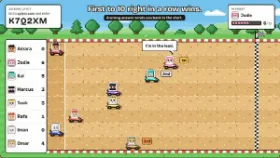
  • Racer in teams

    Theme C is about processes, and the questions turn on where and in what order: stroma or thylakoid, depolarization or repolarization. In team Racer only one teammate has the right option, so the team has to reason it out.

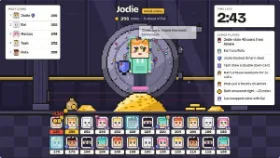
  • Sabotage

    Sabotage plays to a clock you set (3, 5 or 8 minutes), not through the deck, so students keep answering until time is up. Power cards keep the students who are behind in the game.
IB and AP are trademarks of their owners. splycr is not affiliated with or endorsed by the International Baccalaureate or the College Board.